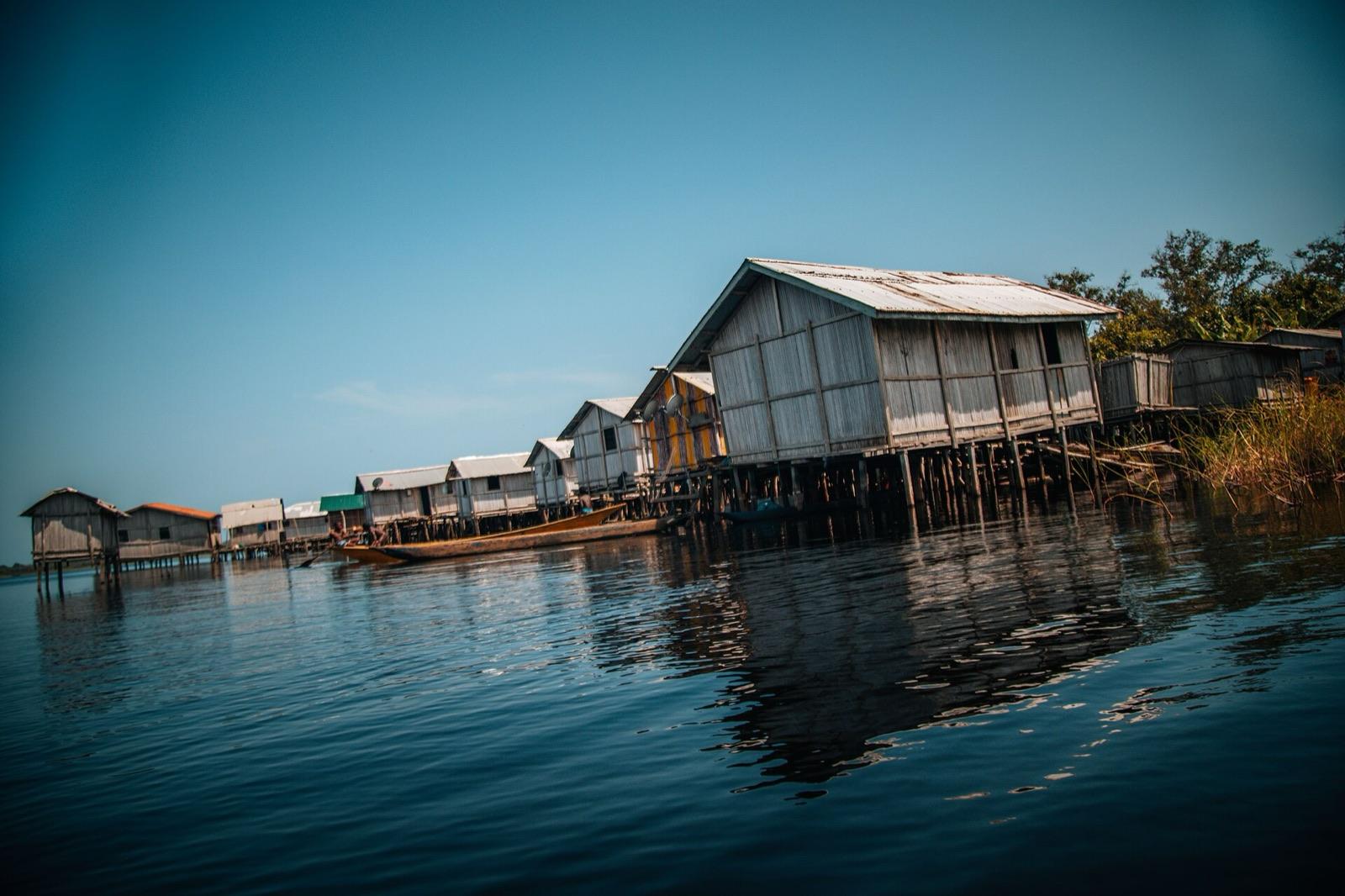
Nzulezo, a village built on water
How a community came to live on stilts over Lake Tadane, how its houses are made, and the customs that still shape life on the lake.
Photo: KwesiRaul, CC BY-SA 4.0
“The surface of the water”
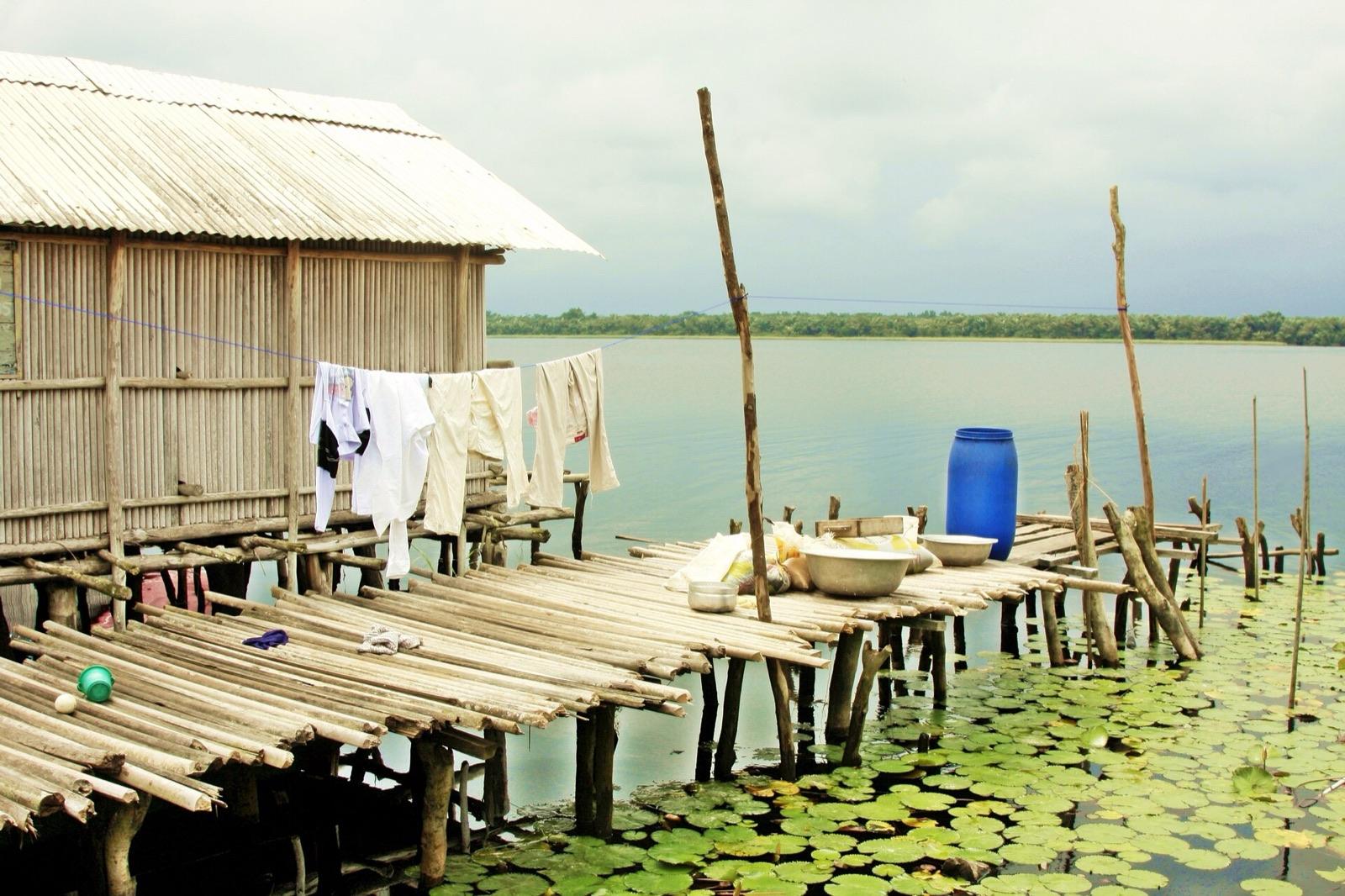
Nzulezo takes its name from Nzema, the language of this corner of Ghana’s Western Region, where it means “surface of the water.” It is an exact description: the whole village stands on stilts and platforms over Lake Tadane, inside the Amansuri wetland near Beyin, close to the border with Côte d’Ivoire.
You will find the name written three ways. Nzulezo is the spelling Wikipedia uses; Nzulezu is the one most people search for; Nzulenzu turns up often too. All three are the same village.
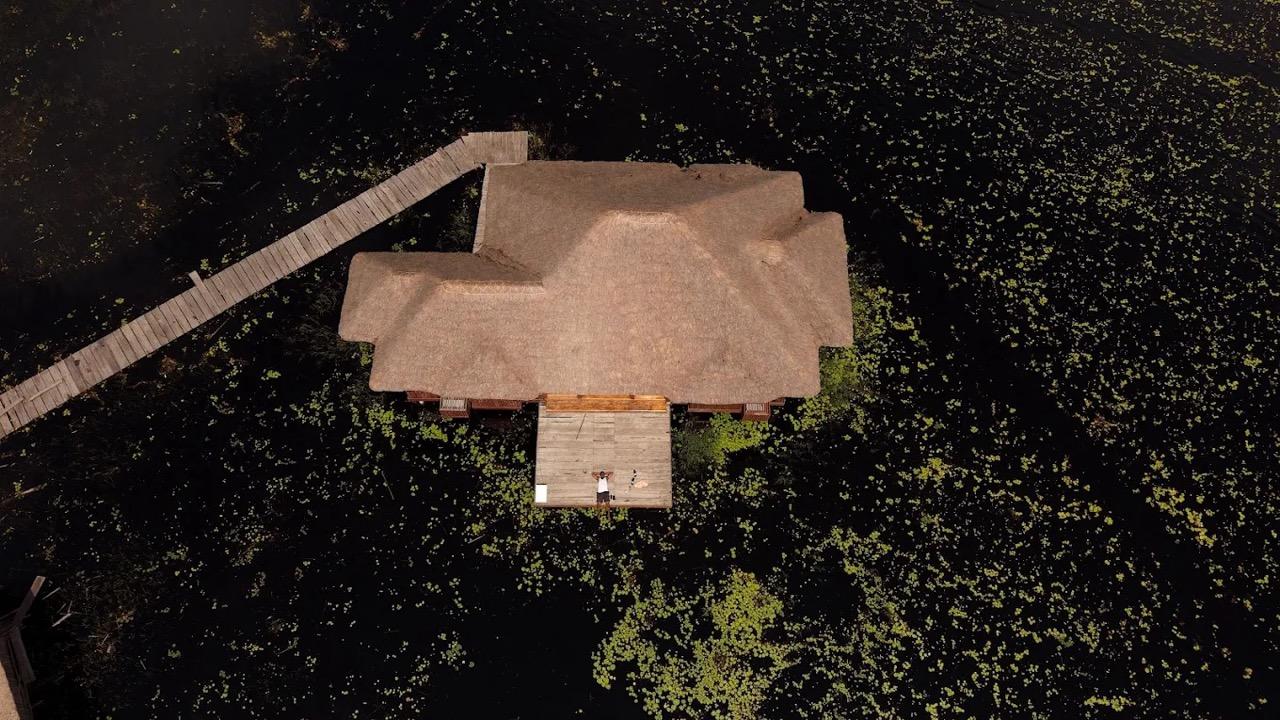
See Nzulezo, then sleep on the water yourself
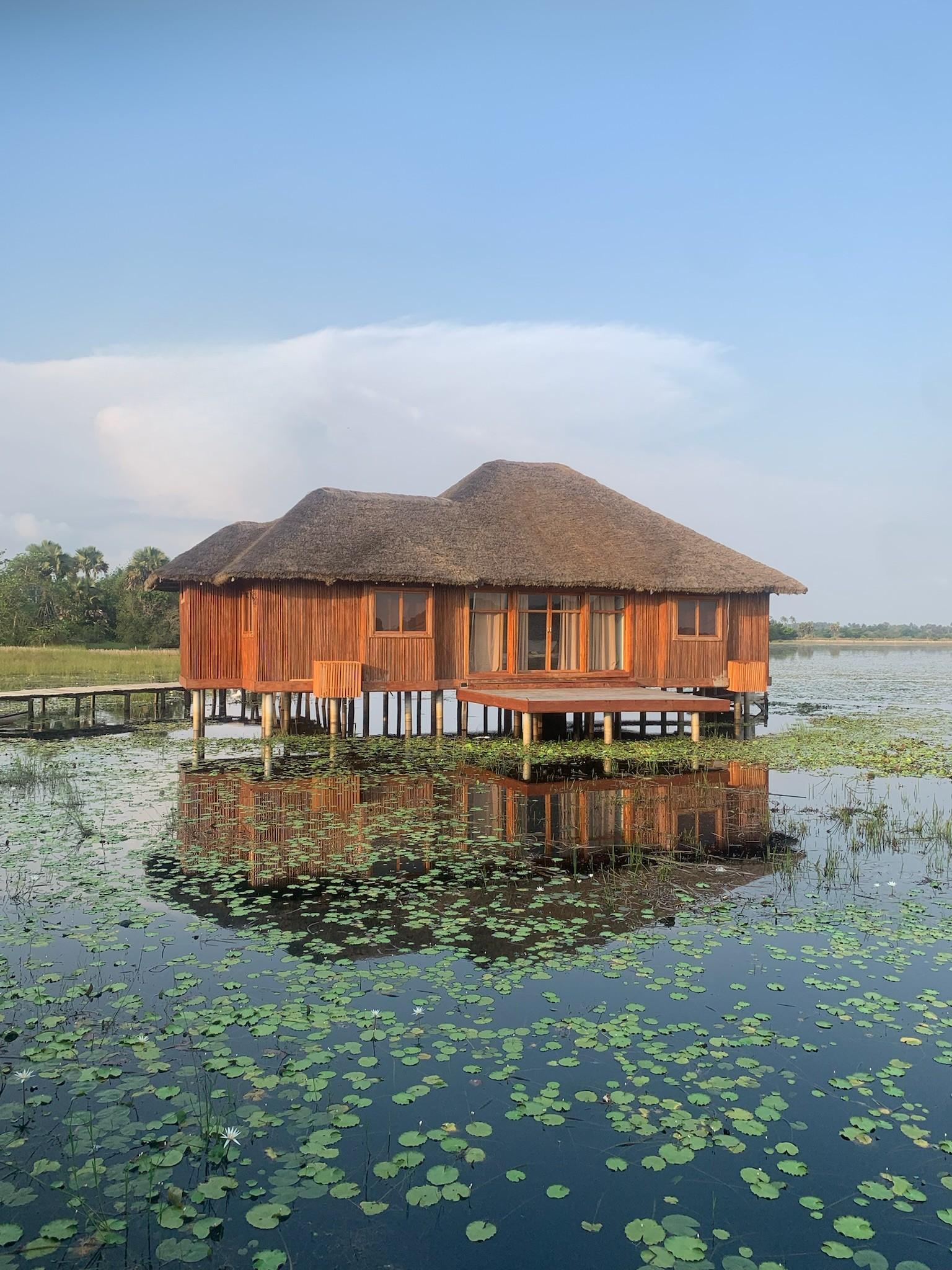
Aracuya is a three-bedroom over-water villa in Beyin, where the canoe to Nzulezo leaves. Stay the night and reach the village in the cool of the morning.
Following a snail to Lake Tadane
Nzulezo’s founding is held in oral tradition rather than written record. The story told in the village is that its ancestors came from Oualata, also written Walata, a city of the ancient Ghana Empire that now lies in Mauritania, and that a snail led them south to the lake.
They built over the water for safety. A village on stilts in the middle of a lake was far easier to defend in times of war than one on open land, and the lake is still seen as the village’s protector, a guard against disasters such as fire.
How long ago that was is uncertain. The Ghana Tourism Authority puts the settlement at around 400 years old, and other accounts reach further back. What is certain is that people have lived on this lake, in this way, for centuries.
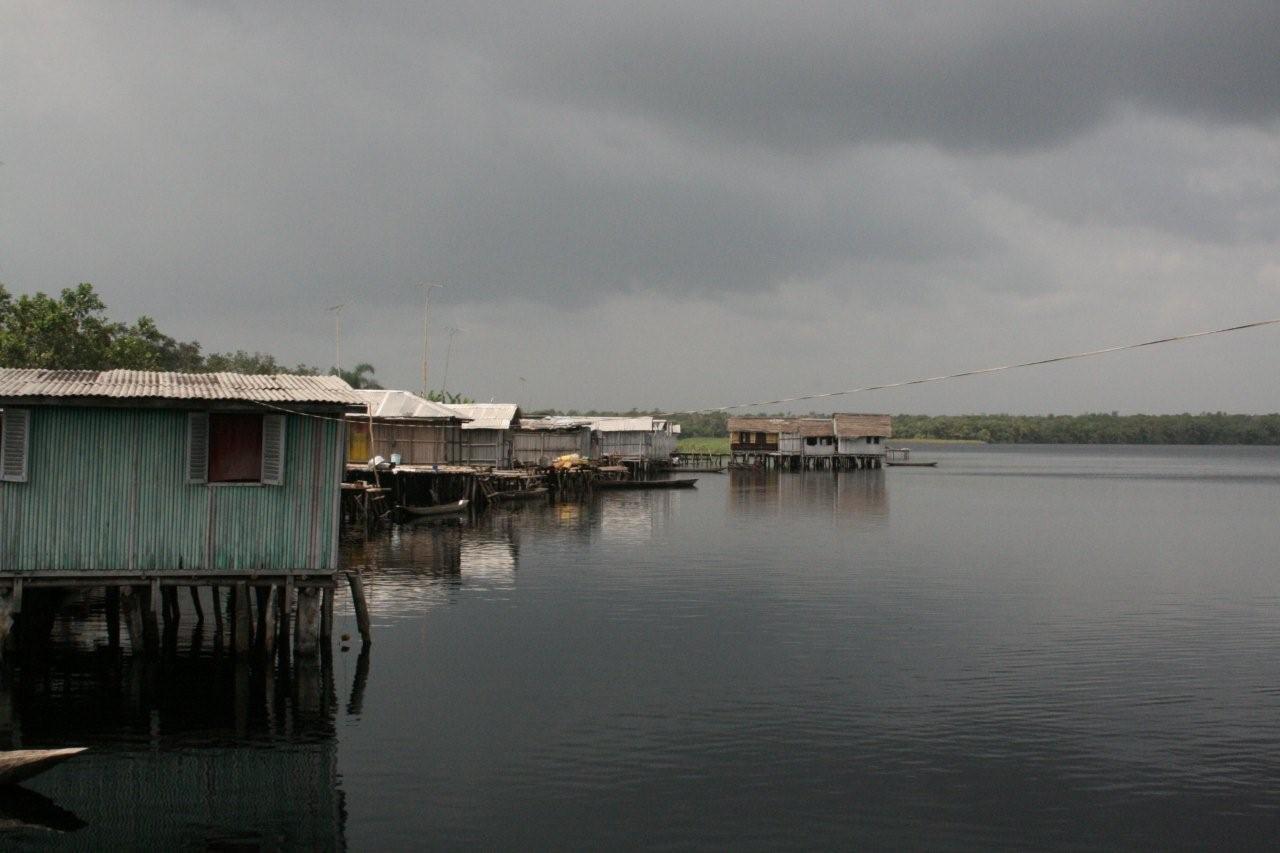
Raffia palm, timber and one long street
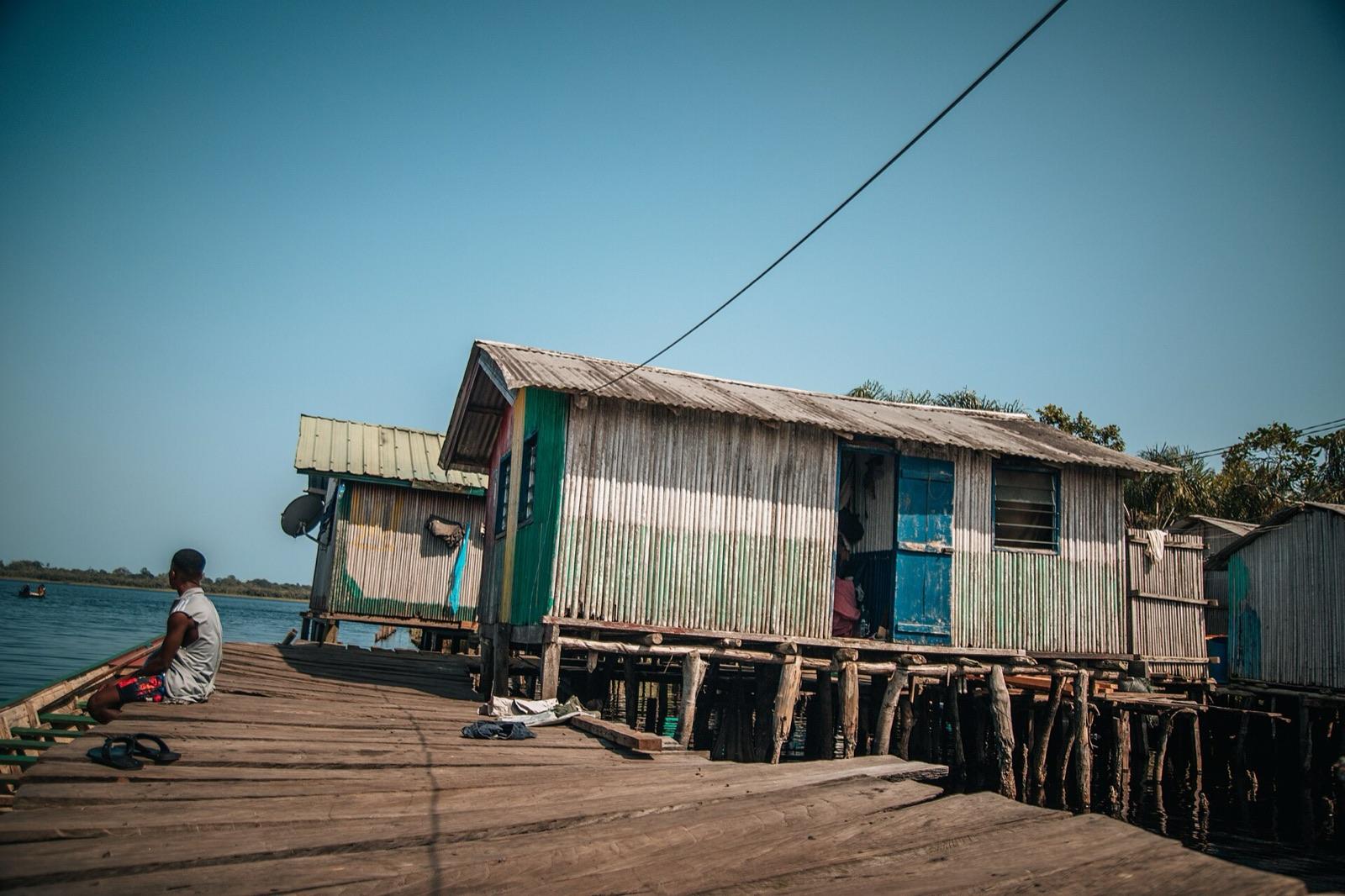
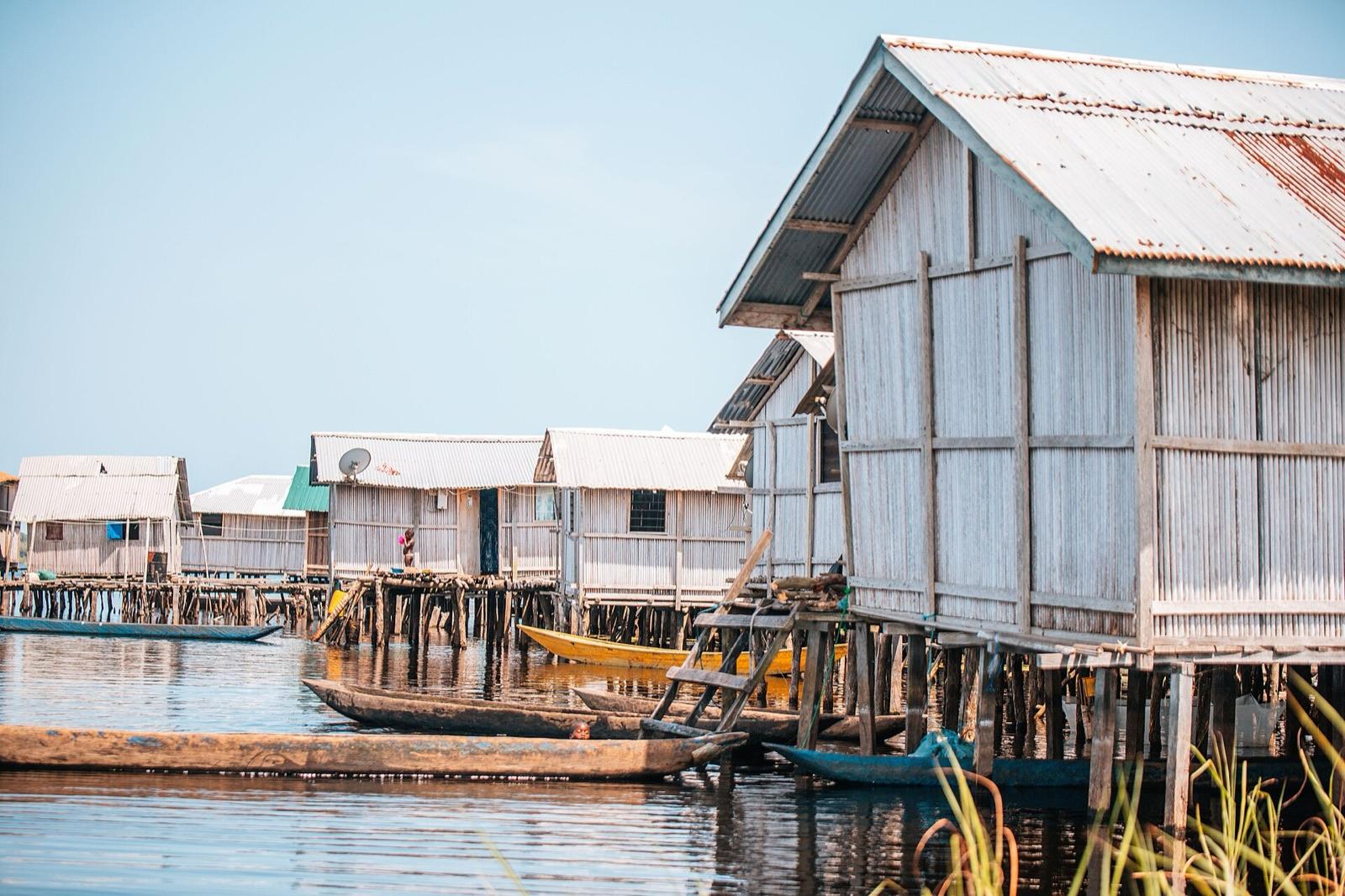
The village is laid out along a single long boardwalk that residents call Main Street. Homes line one side. The school, a community centre and small businesses line the other. Every house, walkway and platform stands on stilts driven into the lakebed.
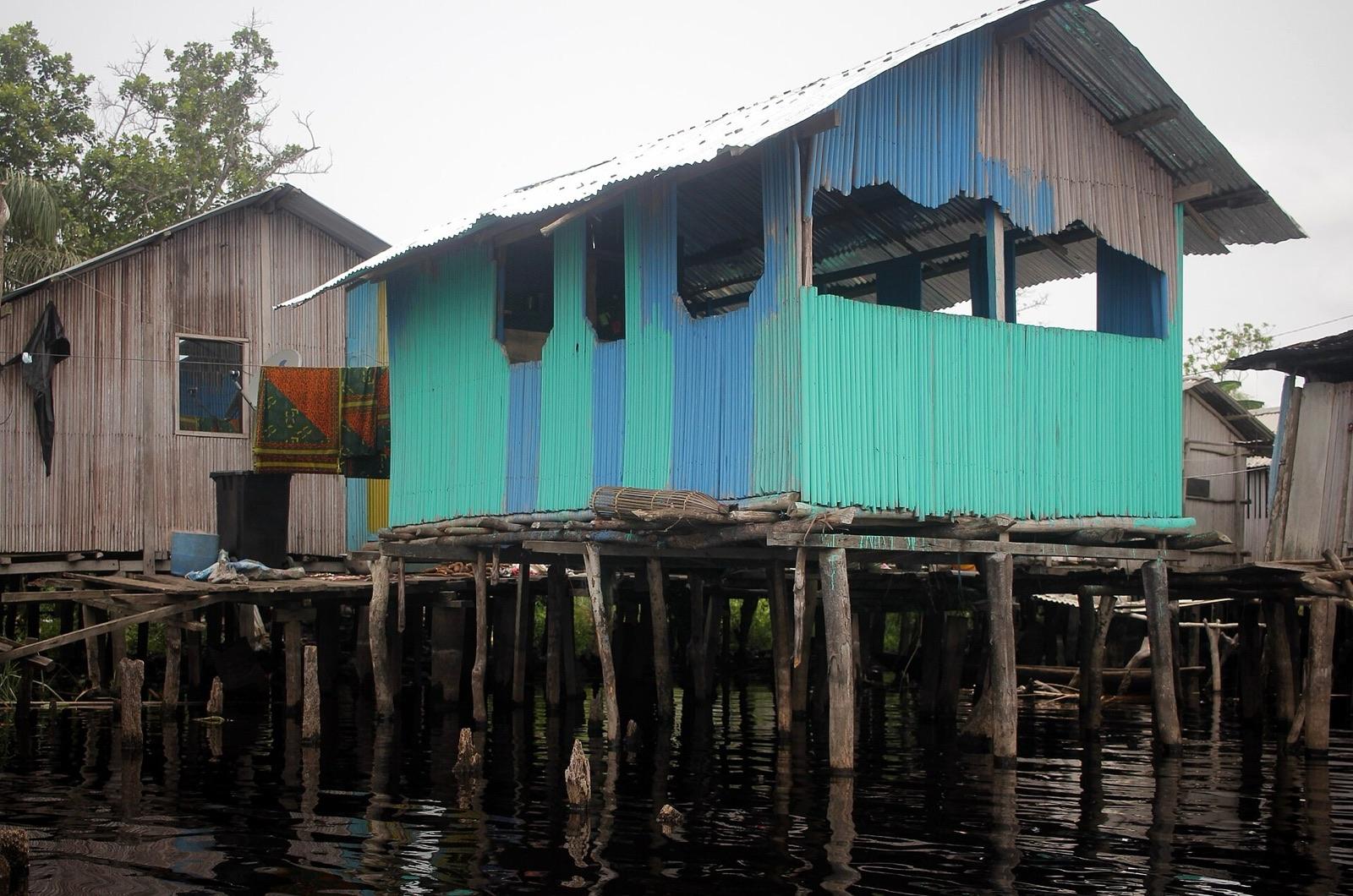
The traditional building material is raffia palm, cut as sticks from the swamp forest around the lake, along with other materials the wetland provides. Building has long been collective work, and the skills involved, from joining the foundation pillars to the floors to lashing the boardwalks with natural rope fibre, are now documented by heritage researchers as an endangered craft.
Newer houses mix sawn timber with raffia palm, and paint and glass windows have arrived, so the village today shows both the old way of building and the new side by side.
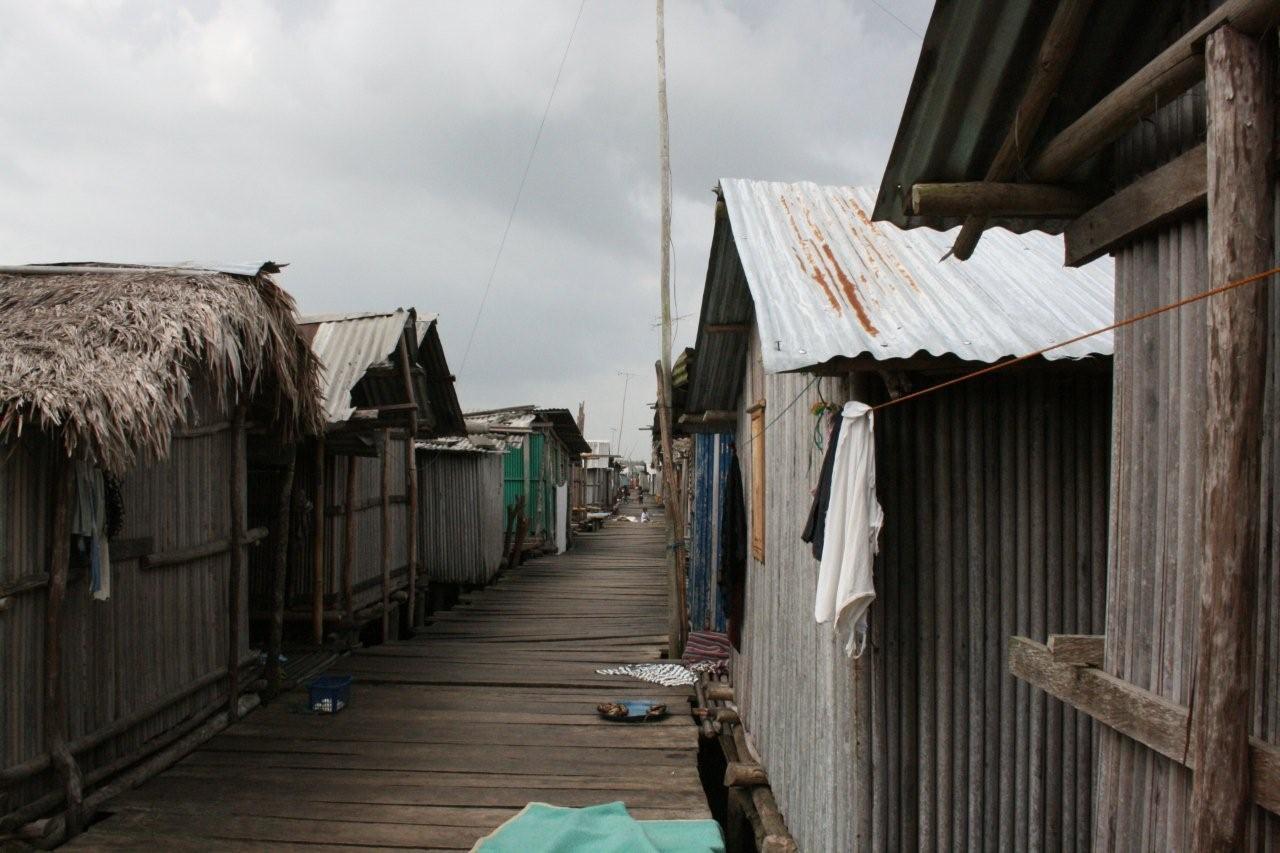
A community that lives on the water
Daily life at Nzulezo happens over the lake. Meals are cooked and fufu is pounded on the platforms; children go to school, families worship, and baptisms and burials all take place on the water. Getting anywhere, to farm, to fish or to reach Beyin, means a canoe.
The lake is also at the centre of the village’s customs. Thursday is its sacred day, set aside from strenuous work on the water. Farming on nearby land is the main livelihood, with fishing, the distilling of akpeteshi, a local spirit, and visitors adding to it.
On UNESCO's Tentative List
In 2000 Ghana added Nzulezo to its UNESCO World Heritage Tentative List, in the cultural category, as one of the few stilt and platform settlements of its kind still lived in, and for the traditions bound up with its lake.
A Tentative List entry is the first step: it marks a place a country intends to nominate. Nzulezo has not been inscribed as a World Heritage Site, but its listing is part of why the village draws visitors from across Ghana and beyond.
The Amansuri wetland
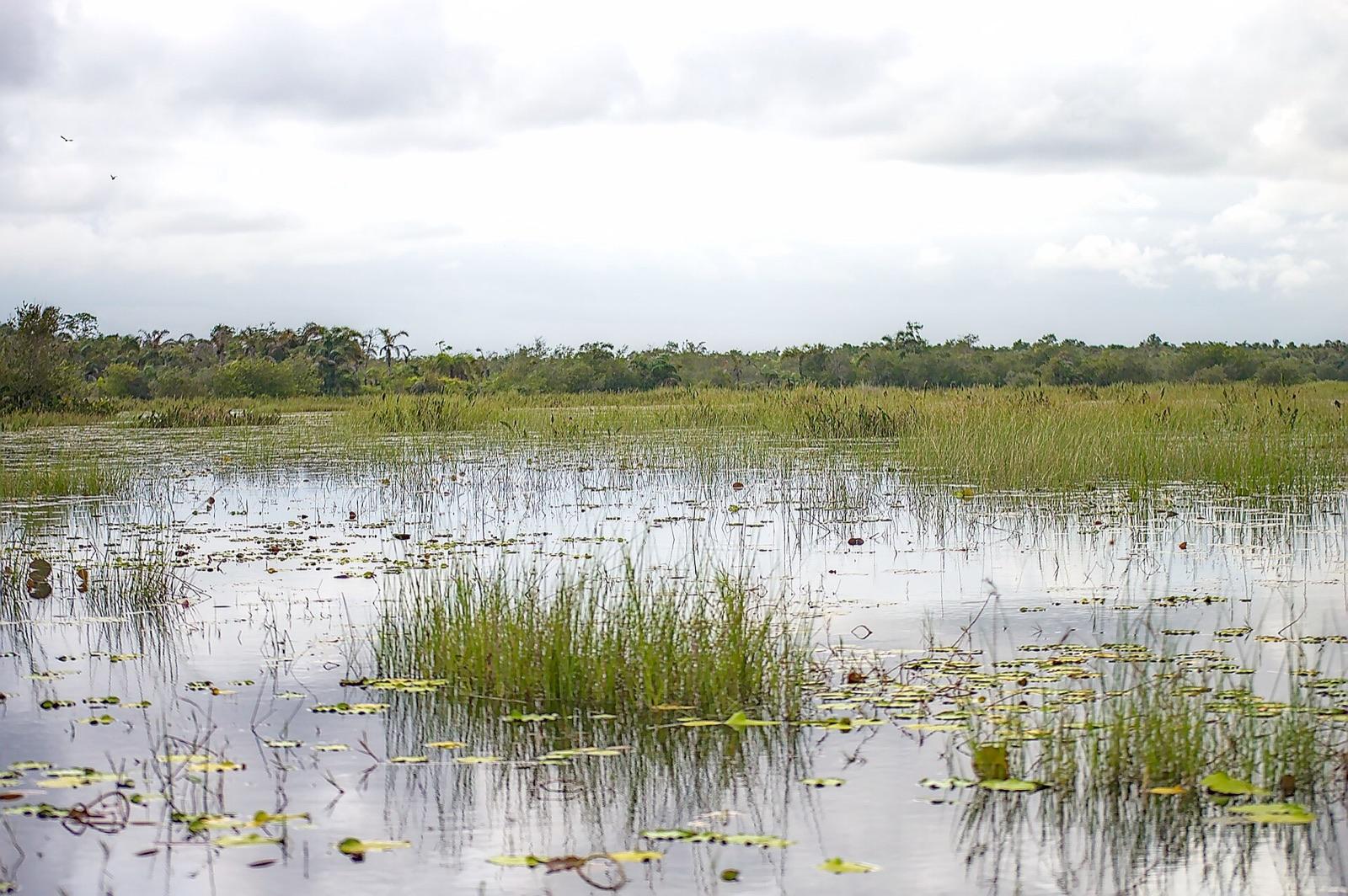
The lake sits inside the Amansuri wetland, described by the Ghana Tourism Authority as the largest inland swamp forest in Ghana and designated an Important Bird Area. The canoe route to the village winds through narrow channels and open plains before reaching the lake, and egrets, herons and kingfishers are often seen along the way.
Nzulezo’s history: common questions
Who founded Nzulezo?
According to local tradition, the founders came from Oualata (Walata), a city of the ancient Ghana Empire in what is now Mauritania, and followed a snail to Lake Tadane, where they settled on the water.
How old is Nzulezo?
Several centuries. The Ghana Tourism Authority describes it as a settlement of about 400 years; other accounts put it older. There is no written record of the founding, so the date rests on oral history.
Why was Nzulezo built on water?
For protection. Building over the lake made the village easier to defend in times of war, and the community still regards the lake as its protector, including against fire.
What are Nzulezo's houses made of?
Raffia palm sticks and other natural materials from the surrounding wetland, raised on stilts. Newer houses mix sawn timber with raffia palm, and some now have paint and glass windows.
What does Nzulezo mean?
“Surface of the water” in Nzema, the language of this part of Ghana’s Western Region. The village is also written Nzulezu and Nzulenzu.
Is Nzulezo a UNESCO World Heritage Site?
It is on UNESCO's World Heritage Tentative List, added in 2000 in the cultural category. That is the list of places a country intends to nominate; Nzulezo has not been inscribed as a World Heritage Site.
Nzulezo today
See it for yourself, and stay on the water too
Aracuya is a three-bedroom over-water villa in Beyin, where the canoe to Nzulezo leaves. Spend the night and you can reach the village in the cool of the morning, then return to a house on stilts of your own.
Planning a visit to Nzulezo? Ask us on WhatsApp
We look forward to welcoming you
Whether planning a retreat or simply seeking an escape, our team is here to craft your perfect stay.